In an increasingly fast-paced world, where daily demands constantly press our minds for attention, it is not uncommon to feel overwhelmed and anxious. Anxiety can manifest in various ways, from a racing mind at bedtime to difficulty concentrating at work. Neuroscientists have been dedicated to understanding how the brain reacts to these stimuli and, more importantly, how we can quickly and effectively turn off this feeling of anxiety.
Data from the World Health Organization (WHO) indicate that about 264 million people worldwide suffer from anxiety disorders. These alarming numbers highlight the need for effective techniques to control the mind and the incessant flow of thoughts that torment us. Fortunately, modern neuroscience offers us a practical and accessible solution: a breathing and focus technique that can clear the mind in a matter of minutes.
Understanding Anxiety and the Flow of Thoughts
To understand how we can turn off anxiety, we first need to understand what it really is. Anxiety is the body's natural response to stress. It is a feeling of fear or apprehension about what is to come, such as the first day of school, a job interview, or a public speech. However, when anxiety becomes excessive, it can interfere with our daily lives.
The Role of the Nervous System
The autonomic nervous system, which regulates involuntary bodily processes, plays a crucial role in the response to stress and anxiety. It is divided into two parts: the sympathetic nervous system, which activates the "fight or flight" response, and the parasympathetic nervous system, which promotes the "rest and digest" response. When we are anxious, the sympathetic system is overactive, leading to symptoms such as a racing heart, rapid breathing, and muscle tension.
Impact on Mind and Body
The constant flow of anxiety-related thoughts can lead to mental overload. This creates a vicious cycle where more anxiety generates more negative thoughts, further increasing anxiety. This cycle can be interrupted by calming the nervous system, allowing the parasympathetic response to take control.
The 2-Minute Breathing Technique
One of the most effective ways to slow down the nervous system is through controlled breathing techniques. Neuroscientists have discovered that the simple practice of deep and controlled breathing can have an almost immediate effect on reducing anxiety.
How to Perform the Technique
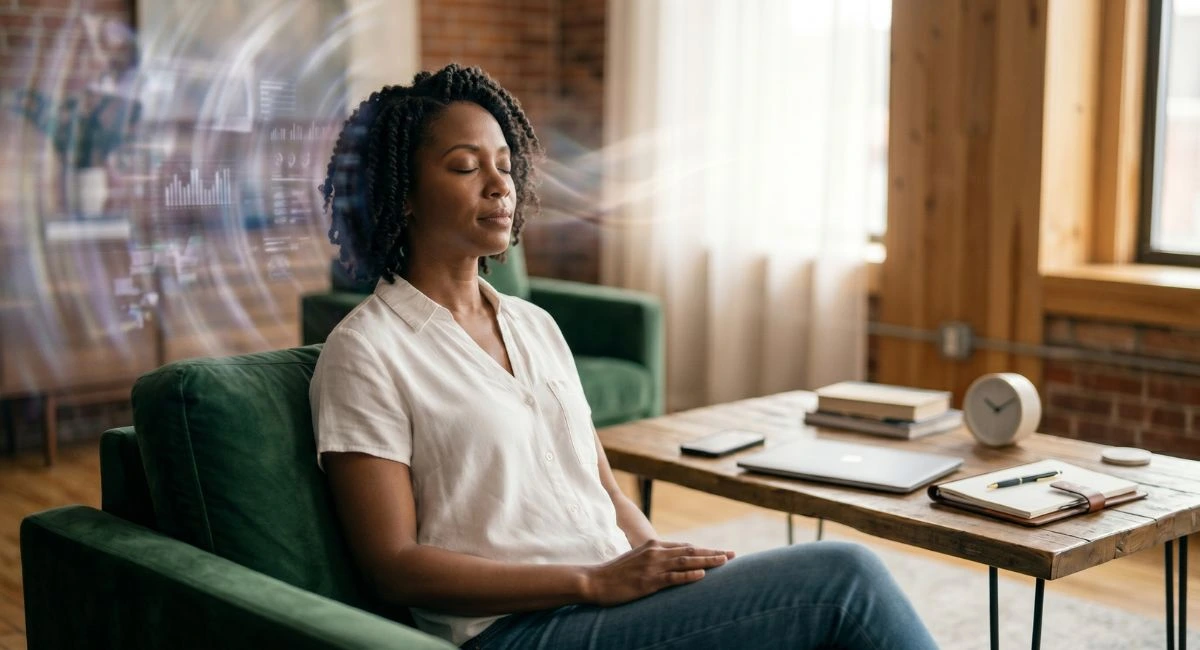
To start, find a quiet place where you can sit comfortably. Close your eyes and begin to pay attention to your breathing. Inhale slowly through your nose, counting to four. Hold your breath for a brief moment, then exhale slowly through your mouth, counting to six. Repeat this process for two minutes.
- Inhalation: Inhale deeply through your nose for 4 seconds.
- Pause: Hold your breath for 1-2 seconds.
- Exhalation: Exhale slowly through your mouth for 6 seconds.
- Repetition: Continue the cycle for two minutes.
- Focus: Concentrate on the sound and sensation of breathing.
Why Does It Work?
Breathing in this way activates the parasympathetic nervous system, reducing cortisol levels, the stress hormone, and promoting a state of relaxation. Regular practice of this technique can not only reduce immediate anxiety but also train your body to respond more calmly to daily stressors.
The Role of Focus in Reducing Anxiety
In addition to breathing, mental focus plays a vital role in managing anxiety. When our mind is scattered, we are more susceptible to anxiety and stress. The practice of focusing the mind can help anchor our thoughts and emotions, providing a sense of control and tranquility.
Focus Practices
Mindfulness exercises, such as meditation, are extremely effective in improving mental focus. These practices teach the mind to concentrate on the present, reducing rumination about the past and worry about the future.
- Guided Meditation: Use apps or videos to help focus your mind.
- Journaling: Writing about your thoughts can help organize them.
- Gratitude Exercises: Focus on positive things daily.
- Mindfulness: Practice mindfulness in daily activities.
- Positive Visualizations: Imagine calm and happy scenarios.
What Do Experts Say?
"Focusing the mind on the present can be one of the most effective ways to relieve anxiety. Studies show that regular meditation can significantly reduce anxiety symptoms," says Dr. John Smith, a neuroscientist at Harvard University.
Incorporating the Technique into Daily Life
To reap the benefits of this technique, it is important to incorporate it into your daily routine. It is not just about using it in moments of crisis, but about creating a habit that strengthens mental resilience over time.
Create a Routine
Set fixed times to practice breathing and focus, such as when waking up or before sleeping. This will help your body and mind get used to the state of relaxation.
- Morning: Start the day with 5 minutes of deep breathing.
- Lunch Break: Take 2 minutes to breathe and focus.
- End of Day: Use the technique before bed to improve sleep.
- During Stress: Apply when feeling anxious at work or home.
- Weekend: Dedicate more time to meditation and relaxation.
Adapting to Your Needs
Everyone is different, and what works for one may not work for another. Try different times and techniques to find what best suits your lifestyle and needs.
Practical Tips to Enhance the Technique
While the breathing technique itself is simple, there are some tips that can enhance its effects and ensure you are getting the most out of it.
- Environment: Choose a calm place without distractions.
- Posture: Maintain an upright but relaxed posture.
- Background Music: Soft sounds can help increase relaxation.
- Consistency: Practice daily for best results.
- Journal: Note your experiences and sensations after practice.
FAQ
1. How long does it take to feel the effects of the breathing technique?
Most people start to feel the immediate relaxation effects after just 2 minutes of practice. With regular practice, the effects can become even more pronounced.
2. Can I do the technique anywhere?
Yes, the breathing technique can be performed anywhere. All you need is a moment to pause and focus on your breathing.
3. What if I can't concentrate during the technique?
It is normal for the mind to wander, especially at the beginning. If this happens, gently bring your focus back to the breath, without judgment.
4. Can the technique replace medical treatments?
The breathing technique is an effective complement but should not replace medical treatments prescribed by health professionals. Always consult a specialist for mental health issues.
5. Is the technique safe for everyone?
Yes, the breathing technique is safe for most people. However, if you have specific medical conditions, it is always good to consult a doctor before starting any new wellness practice.
Conclusion
Anxiety is a natural part of modern life, but it doesn't have to be a constant. With simple techniques like controlled breathing and mental focus, we can turn off the anxious mind and find peace in the present. Regular practice not only alleviates immediate stress but also strengthens our ability to handle future challenges. By incorporating these techniques into your daily routine, you increase your mental resilience and improve your quality of life.
Let science guide you towards a state of calm and balance. Try the 2-minute technique today and see how it can transform your way of dealing with anxiety and the flow of thoughts.


